
太阳能博客

太阳能逆变器博客

主页 太阳能逆变器博客

Which Hybrid Inverter is Right for Your Next Solar Project? A Professional Selection Guide

Which Hybrid Inverter is Right for Your Next Solar Project? A Professional Selection Guide

April 28, 2026

The global transition toward renewable energy has transformed the hybrid inverter from a niche component into the beating heart of modern residential and commercial power systems. However, for solar contractors and property owners, the sheer variety of technical specifications can be overwhelming. Selecting the wrong unit doesn’t just mean inefficient energy harvest—it can lead to system failures in extreme weather or incompatibility with local grid standards. Whether you are designing a compact off-grid cabin or a robust backup system for a North American luxury home, understanding the synergy between power output, phase requirements, and environmental protection is paramount.

When planning a high-resilience outdoor installation, the IP65 Dual-Output Hybrid Solar Inverter represents the pinnacle of modern engineering, offering a fully sealed architecture that thrives where standard inverters would falter. But is a high-protection model always necessary, or should you prioritize raw power and phase compatibility? This guide breaks down the critical decision matrices to ensure your next solar project delivers maximum ROI.


IP65 Smart Dual-Output Hybrid Solar Inverter-2


1. Environment First: The IP65 Revolution

Most traditional hybrid inverters are designed for indoor installation—typically in garages or utility rooms. However, real-world project constraints often force installers to place equipment in carports, humid basements, or even direct sunlight.

  • The Vulnerability of Standard Units: Standard inverters rely on internal fans and vents for cooling. In coastal areas with salt mist, or agricultural zones with high dust levels, these vents become entry points for corrosion and debris, significantly shortening the lifespan of the PCB.

  • The IP65 Advantage: An IP65-rated unit is "dust-tight" and protected against water jets from any angle. By utilizing advanced heat-sink technology instead of open-ventilation cooling, these units offer a "set it and forget it" solution for harsh environments. If your project site experiences heavy rainfall or extreme humidity, choosing a sealed unit is the most effective way to minimize long-term maintenance costs.

  •  

2. Power Scaling: Finding the "Sweet Spot" (6.2kW vs. 12kW)


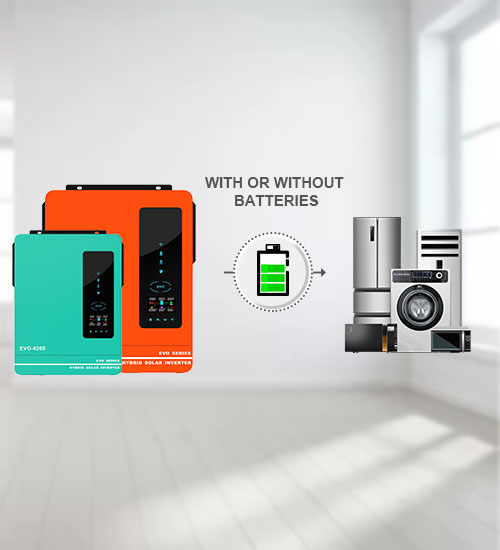
Start Directly Without Batteries


Power requirements are rarely static, but they generally fall into two categories: essential backup and full energy independence.

For standard residential projects focused on optimizing self-consumption, the 6.2KW Dual Output Hybrid Solar Inverter has emerged as the industry’s "Goldilocks" solution. It provides enough capacity to run high-surge appliances like air conditioners and water pumps while maintaining an affordable price point for the average homeowner. The dual-output feature is particularly critical here; it allows the system to intelligently shed non-essential loads during a power outage, ensuring that the critical "Output A" (refrigerators, lights, medical equipment) stays live even when the battery is low.

In contrast, 12kW systems are designed for heavy-duty applications. This includes large estates with multiple HVAC units or small commercial workshops where the simultaneous startup of several motors requires a massive surge buffer.


3. The Phase Factor: Why Split-Phase Matters


hybrid-inverter-connected-to-diesel-generator-and-lithium-battery


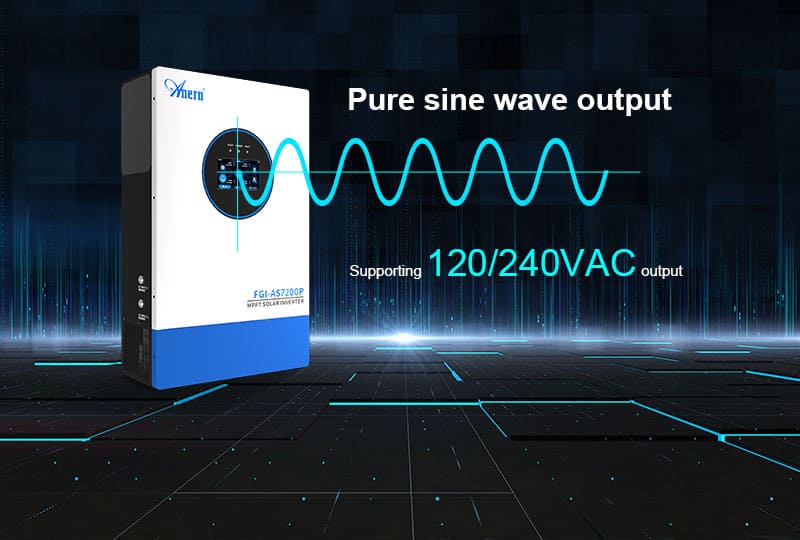
One of the most common pitfalls in international solar procurement is a misunderstanding of voltage standards. While much of the world operates on a 230V single-phase system, the North American and certain South American markets utilize a 120V/240V split-phase system.

Installing a single-phase inverter in a split-phase home requires expensive external transformers and complex wiring. This is where the 12kW Split-Phase Hybrid Solar Inverter becomes indispensable. By natively supporting the US standard, it allows for a direct connection to the home’s main breaker panel, providing balanced power to both 120V circuits (outlets and electronics) and 240V heavy appliances (dryers and electric vehicle chargers).


4. Technical Comparison: At a Glance

To help you visualize the best fit for your specific client base, the following table compares the core performance metrics of our flagship hybrid solutions:

Feature IP65 Dual-Output Model 6.2kW Dual-Output Model 12kW Split-Phase Model
Primary Market Global / Harsh Environments Residential Self-Consumption North America / Large Estates
Protection Rating IP65 (Fully Waterproof) IP21 (Indoor Only) IP21 (Indoor/Protected)
Phase Output Single Phase (230V) Single Phase (230V) Split-Phase (120V/240V)
Dual AC Output Yes (Smart Load Management) Yes (Priority Management) No (High Capacity Focus)
Max PV Input Optimized for Mid-Range Arrays High Efficiency Tracking Dual MPPT for Large Arrays
Best For Coastal/Outdoor Projects Modern Family Homes Off-Grid Mansions / US Markets


5. Smart Load Management: Beyond Just Battery Storage

The modern hybrid inverter is no longer just a power converter; it is an intelligent energy manager. The "Dual Output" technology found in our 6.2kW and IP65 models addresses a primary consumer fear: running out of battery at night.

By separating the home's electrical circuits into "Primary" and "Secondary" outputs, the inverter acts as an automated switchboard. When the solar panels stop producing and the battery reaches a pre-set discharge limit, the inverter automatically cuts power to the secondary output (which might power a dishwasher or pool pump) while maintaining an uninterrupted flow to the primary output. This level of granular control is what differentiates a high-end solar installation from a basic one, providing the end-user with peace of mind without requiring manual intervention.


6. The Long-Term Reliability Checklist

Before finalizing your procurement list, consider these three professional factors that often go unmentioned in basic spec sheets:

  1. Thermal Dissipation: High-power inverters like the 12kW units generate significant heat. Ensure your installation site has at least 20cm of clearance on all sides to allow the internal cooling systems to function at peak efficiency.

  2. Communication Protocols: Modern solar projects often involve lithium battery integration (LiFePO4). Ensure your inverter supports BMS communication (RS485/CAN) to allow the inverter to "talk" to the battery for optimized charging cycles.

  3. Scalability: If a client’s energy needs grow, can you add more capacity? Look for units that support parallel operation, allowing you to link multiple inverters together as the solar array expands.

Choosing the right technology is about matching the equipment to the specific constraints of the site and the lifestyle of the user. For a robust, US-standard residential installation that requires heavy lifting, the split-phase 12kW architecture remains the undisputed leader in performance and compliance. Meanwhile, the versatility of dual-output systems ensures that even smaller installations can achieve a level of reliability previously reserved for industrial-grade microgrids. By focusing on these technical nuances, you position your solar business as a provider of tailored solutions rather than just a hardware vendor, ensuring that every project you complete becomes a long-lasting testament to sustainable engineering.


深圳亚能光电有限公司 版权所有 .Xml | 隐私政策 网络支持

Click Here To Get Free Quote

Click Here To Get Free Quote
提交

主页

产品

联系我们